


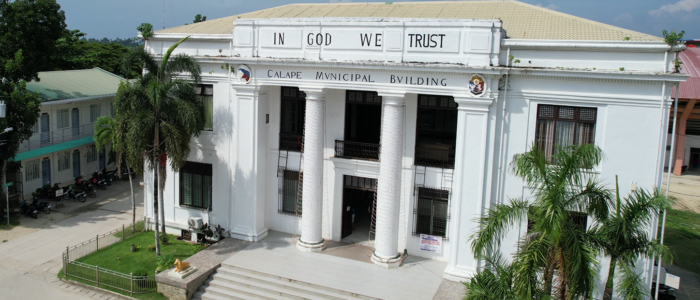
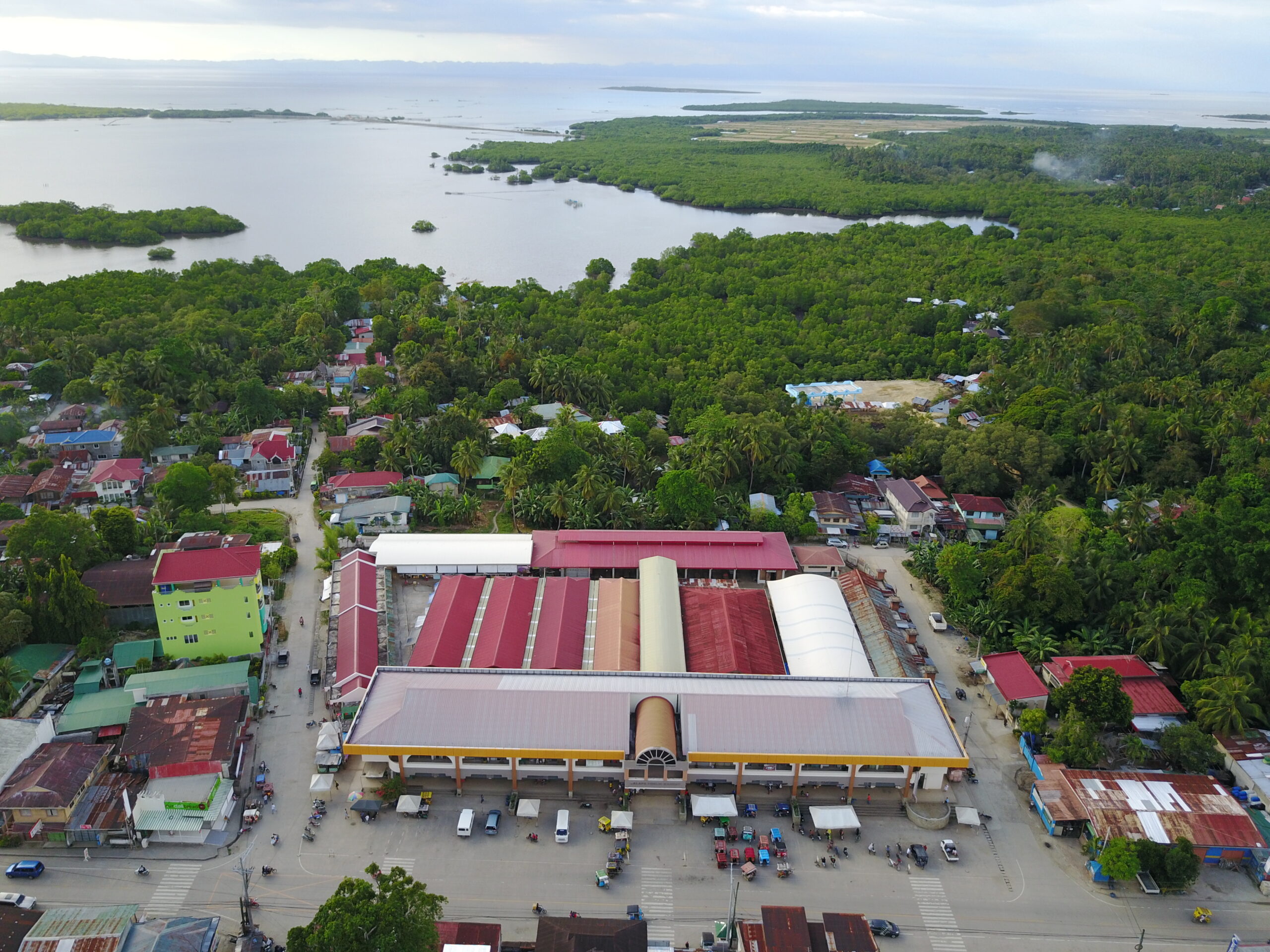
The Calape Public Market has long been the heart of the town’s daily life. Even before a formal marketplace was established, residents would gather along the town plaza and riverbanks to trade rice, fish, and local produce. In the early 1900s, a dedicated market structure was built near the municipal hall, giving merchants a permanent space while centralizing commerce. Over the decades, the market expanded with concrete stalls and wider walkways to accommodate growing trade.
The market is a lively snapshot of Calape’s culture and rhythms. Vendors sell fresh seafood from nearby Panglao waters, fruits and vegetables from local farms, and handmade snacks like binakol and kalamay. The wooden tables, tarpaulin shades, and colorful umbrellas give the market a patchwork charm, reflecting practicality more than design. Yet the bustle, the calls of the vendors, and the aroma of fresh goods make it uniquely vibrant.
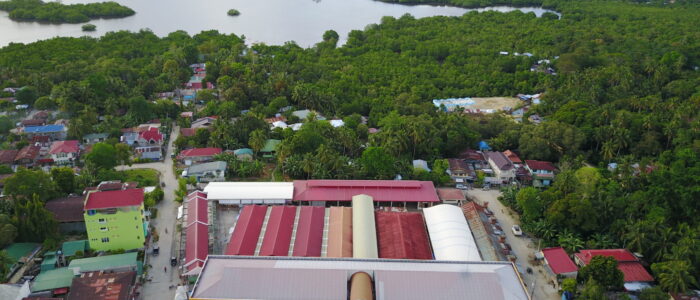
Structurally, the market is straightforward — low concrete buildings with open-air sections and narrow corridors — designed for utility and airflow in the tropical climate. Overhead, faded signs and improvised awnings add a layer of history, showing how locals adapt and evolve the space rather than redesign it entirely.
The market’s busiest days are Thursdays and Saturdays, when farmers and fishermen from neighboring barangays bring their goods. Early mornings are a feast for the senses: clanging metal, haggling voices, and the scent of freshly caught fish mixing with tropical fruit. It’s a place where both locals and visitors can feel the pulse of Calape’s daily life.
For travelers, visiting the Calape Public Market is more than just shopping — it’s a glimpse into the town’s living traditions, the local economy, and the community’s enduring resourcefulness.